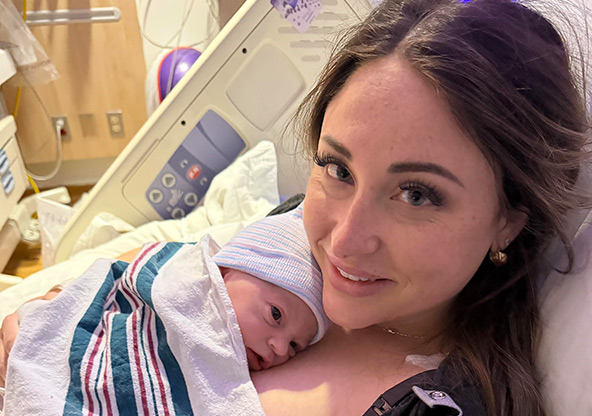
Understanding a Prenatal Cystic Fibrosis Diagnosis
Historically, a cystic fibrosis diagnosis marked the beginning of a lifetime of care—daily airway clearance, medications to manage lung infections, nutritional support and frequent monitoring. Newer therapies that precisely target the gene mutations underlying the disease have improved outcomes, but they aren't administered until well after symptoms become established, and they aren't cures.
Dr. Louise Giles, a pediatric pulmonologist at CHRISTUS Children's in San Antonio and one of Nolte's doctors, was thinking there might be a better alternative.
Recent reports described earlier-than-usual applications of one of the new therapies, a three-drug combination called Trikafta, that has revolutionized cystic fibrosis treatment since the FDA approved it for patients 2 and older in 2019. Instead of waiting until then, a few doctors had given the targeted therapy to pregnant women carrying babies diagnosed with the condition.
The idea is that the drug crosses the placenta and works as an in-utero therapy, correcting the underlying defect in the baby and thus preventing the mucus buildup.
"I thought, 'that's really cool,'" said Dr. Giles. "I wonder if we should try that here.”
She suggested it to Nolte.
Considering In-Utero Treatment for Cystic Fibrosis
The therapy was not without risks. Trikafta, while transformative, carries rare, but possible, known side effects: liver damage, cataracts, and even mental health complications. Those risks have been documented in children and adults, but the therapy hasn't been studied in pregnant women without the disease or fetuses exposed to the medication before birth.
It wasn't an easy decision. Nolte had avoided even over-the-counter medication during pregnancy. And at the time, the complications in the baby were so slight that Nolte couldn't really see them in the imaging.
“I didn’t want to medicate something that didn’t need medicine,” she said.
But Nolte decided that the cost of doing nothing was too great. She wanted to give her baby a chance at the best possible life,so she, her husband, and Dr. Giles decided it was worth a try.
Insurance took some convincing. They denied coverage of the therapy four times before CHRISTUS Children’s staff prevailed.
In March, about 31 weeks into the pregnancy, Nolte began taking a daily dose of the drug combination. No one knew what would follow.
Nolte was closely monitored from the onset of the treatment through the remainder of the pregnancy, but the news was consistently good. She experienced no complications, and biweekly scans showed no significant bowel obstruction, one of the earliest and most serious complications in infants with cystic fibrosis.
The Moment of Truth: Baby Born After Receiving Cystic Fibrosis Treatment in the Womb
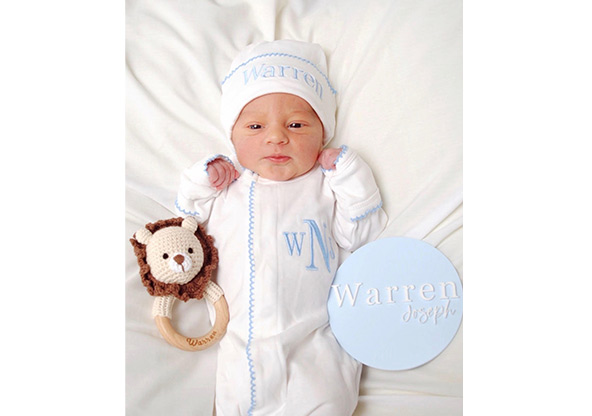
On May 13, 2026, Nolte gave birth to Warren Joseph, 7 pounds, 5 ounces, a picture of health. Still, doctors and Nolte watched closely for complications.
In particular, they waited for Warren's first bowel movement, an early test of whether he was producing the thick, sticky mucus that characterizes cystic fibrosis. The outcome: there was no mucus. No one was more relieved than Nolte.
“I fell to my knees and thanked God,” she said.
Nolte and baby went home the next day. More than a month later, Warren remains complication-free, a cystic fibrosis patient without symptoms. Nolte continues to take the drug combination, so Warren can still receive it through breastfeeding. Once that ends, the plan calls for Warren to begin taking it directly.
Nolte acknowledges her journey was a roller coaster—the joy of learning she was pregnant, the discovery she and her husband are genetic carriers, the anxiety-inducing news of her baby's diagnosis, the hope of a promising therapy, and the constant tests. But it all turned out okay in the end because they have a healthy baby boy.
A New Path Forward
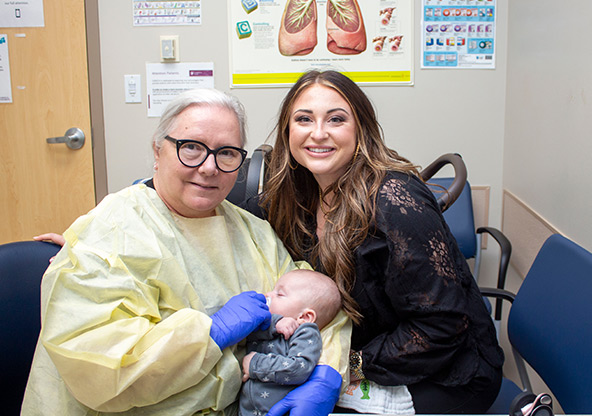
"He's doing amazing," said Nolte. "I can't thank the care team at CHRISTUS Children’s enough—they are the people who saved his health."
Dr. Giles is happy CHRISTUS Children’s was able to help give the story a happy outcome, but she says the credit belongs to Nolte, who braved the unknown to give her son a better life. "I'm in awe of her," says Dr. Giles.
Dr. Giles is also grateful for Trikafta, which she calls a game changer. At CHRISTUS Children’s, the therapy's impact has already changed the landscape. Children with cystic fibrosis are healthier, more active—and, increasingly, seen in outpatient clinics rather than in the hospital.
“Start before the patients are born,” said Dr. Giles. “Prevent the complications before they happen.”
Learn more about pediatric pulmonology, genetic counseling, and specialized care for children with cystic fibrosis at CHRISTUS Children's in San Antonio.